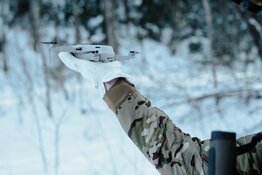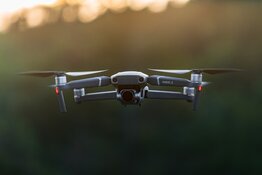


Ukraine's new generation of mid-range drones is significantly impacting Russian military operations by attacking key infrastructure such as bridges, trains, and fuel trucks, potentially thwarting Moscow's plans for a summer offensive, according to a report by Tim Lister, Daria Tarasova-Markina, Gianluca Mezzofiore, Luke Unger, and Oliver Sherwood for CNN on June 21.
According to video and image analyses conducted by French open-source analyst Clément Molin, the volunteer-run OSINT group Geoconfirmed, and CNN, approximately 150 strikes on Russian logistical assets have been verified. It is suspected that many additional strikes have not been recorded. These attacks have intensified since early May, with increased targeting of port facilities and ships.
The Ukrainian drones, which have a range of 50 to 300 kilometers and are all domestically produced, are designed to disrupt the Russian army's logistics, adding a strategic layer to Ukraine's military operations as the conflict enters its fifth year. The changes the conflict is bringing to warfare are also drawing the eyes of governments, militaries, and defense companies globally as they try and catch up with a sector that is maturing very quickly.
Notable among the drones being used in Ukraine are the FP-2 and the Behemoth, the latter having a cruising speed of 180 km/h and the capability to carry a 70-kilogram warhead.
"The Ukrainians have obtained the means to start a large-scale drone campaign to cut Crimea from its main supply roads and to complicate Russia's logistical situation throughout the frontline," Molin said.
In response to the escalating drone strikes, the Russian-backed regional government in Crimea restricted fuel availability to government agencies only, excluding ordinary citizens and businesses.
Ukraine's Unmanned Systems Forces, the military branch overseeing drone operations, told CNN that the number of mid-range strike missions had increased 28-fold over the past year. The primary objectives of these missions are to diminish Russia's offensive capabilities, create significant logistical and supply challenges for the enemy, and eliminate Russian air defenses in occupied territories to pave the way for longer-range Ukrainian drones.
The drone strikes have rendered several routes between Russia and occupied Ukraine perilously unsafe, leading to a critical shortage of fuel and munitions for Russian troops on the southern front. This disruption is significantly hindering President Vladimir Putin's wartime objectives, indicating a shift in the dynamics of the conflict.
Recent Ukrainian drone attacks have marked a significant escalation in the ongoing conflict, with Ukraine launching its most extensive drone attack to date, according to a report by Aparajita Dutta for Zacks on June 23. The assault targeted Moscow, hitting the capital's critical infrastructure and causing the shutdown of a major oil refinery and the suspension of operations at Moscow airports. This bold strategy underscores a pivotal shift in modern military tactics, emphasizing the increasing reliance on unmanned aerial vehicles (UAVs) in warfare.
"This unprecedented wave of aerial warfare, once again reflecting a fundamental shift in modern military strategy, has placed a sharp global spotlight on drone manufacturers," the author noted.
A Quickly Changing Market
According to Grand View Research in June 2026, the global military drone market size was valued at US$47.4 billion in 2025 and is projected to grow from US$54.2 billion in 2026 to US$98.2 billion by 2033, at a CAGR of 8.9% from 2026 to 2033.
"The market growth is driven by rapid technological advancements in AI, machine learning, and autonomous navigation, enabling real-time decision-making and swarm operations, as well as escalating demands for border security, counterterrorism, and electronic warfare capabilities that leverage long-endurance platforms with enhanced payload capacities," the firm noted.
Investments from significant entities like the U.S. Department of Defense's Replicator initiative, NATO modernization programs, and collaborations between defense contractors and technology firms are propelling research and development in areas such as stealth technology, 5G-enabled real-time communication, and counter-drone defenses, Grand View said.
These investments are part of a broader trend of technological advancements that are enhancing the operational capabilities of military drones. Innovations include improved sensor systems, high-resolution cameras, advanced avionics, and integration with real-time data networks like 5G, which enable drones to execute critical missions such as intelligence, surveillance, reconnaissance (ISR), target acquisition, and precision strikes with greater accuracy and efficiency.
The strategic importance of drones in modern warfare is increasingly recognized, particularly their role in multi-domain operations and swarm tactics, the report said.
This recognition is driving military procurement and modernization programs, as governments worldwide see the cost-effectiveness of unmanned systems compared to traditional manned aircraft. This is leading to substantial investments aimed at expanding military drone fleets.
Additionally, the focus on enhancing C4ISR (Command, Control, Communications, Computers, Intelligence, Surveillance, and Reconnaissance) capabilities is reshaping modern military operations. The advancement of these capabilities facilitates seamless manned-unmanned teaming, improved situational awareness, and greater adaptability in missions.
A notable initiative is the U.S. Department of Defense's Collaborative Combat Aircraft (CCA) Program, launched in 2025, which aims to develop semi-autonomous, jet-powered drones that operate alongside manned fighters.
Furthermore, escalating geopolitical tensions are prompting nations to increase their defense budgets and prioritize investments in advanced military technologies, including sophisticated unmanned aerial systems. Countries are allocating larger portions of their GDP to defense in response to emerging threats, contested borders, and the need for technologically advanced armed forces, Grand View wrote.
'The Year of the Drones'
According to the Stockholm International Peace Research Institute (SIPRI), global military spending hit a record high in 2025, largely driven by major powers such as the U.S., China, Russia, and Germany. These increased expenditures reflect ongoing traditional security challenges and the urgency to equip militaries with state-of-the-art technologies like AI-driven C4ISR systems, autonomous drones, and hypersonic weapons, signaling robust growth prospects for the military drone industry in the coming years.
A Stifel report in December predicted 2026 would be "The Year of the Drones," according to a December 17, 2025, report by Seeking Alpha. The analysis noted unmanned system spending is at a "major inflection point," driven by a "trifecta" of technological advancements, escalating geopolitical threats, and new political will following the change in administration earlier last year.
Several companies are poised to join the current of the quickly changing industry, including Red Cat Holdings Inc., Unusual Machines Inc., and private company Firestorm Labs.
Red Cat Holdings Inc.
Red Cat Holdings Inc. (RCAT:NASDAQ) recently announced it was contributing to U.S. military capabilities by providing its Black Widow drones for a U.S. Army Threat Analysis Kit, which is being delivered by Safe Pro Group Inc. (SPAI:NASDAQ). The collaboration is part of a contract valued at approximately US$743,000.
 Streetwise Ownership Overview*
Red Cat Holdings Inc. (RCAT:NASDAQ)
| Date | Old Symbol | Old Shares | New Symbol | New Shares |
|---|---|---|---|---|
| 04/30/21 | RCAT | 1 | RCAT | 1 |
| 08/29/19 | TFVRD | 1 | RCAT | 1 |
The kit integrates Safe Pro's AI-driven Navigation Observation and Detection Engine (NODE) with Red Cat's drones, and includes annual updates for AI models and algorithms, along with operational field support.
Safe Pro recently secured a subcontract from a defense prime contractor to enhance the U.S. Army's battlefield intelligence with its patented AI technology. This system leverages video data captured by the Black Widow drones and encompasses training, software upgrades, and operational support services. Safe Pro has indicated that training for U.S. Army personnel is expected to be completed by the end of June, with operational support continuing through the third quarter of 2026 and during scheduled exercises.
The NODE system, powered by Safe Pro's SPOTD (Safe Pro Object Threat Detection) technology, utilizes AI and machine learning algorithms to identify threats such as landmines, cluster munitions, unexploded ordnance, and ambush drones. The company claims that this platform can detect over 150 types of explosive threats and objects of interest.
In related industry news, a drone industry commentary dated June 11 discussed the ongoing expansion in defense, commercial, and agricultural drone markets, noting Red Cat as a key player.
The report forecasts that the global military drone market could generate annual revenues between US$80 billion and US$90 billion by 2030, while the global commercial drone market is projected to surpass US$54 billion by the same year. Additionally, the commentary highlighted developments in Red Cat's maritime division, Blue Ops, which has announced that it is moving into full-rate production of the Variant 7 uncrewed surface vessel platform, aimed at defense and national security missions.
On March 3, Glenn Mattson, an analyst at Ladenburg Thalmann, reaffirmed a Buy rating on Red Cat Holdings and increased his price target from US$15 to US$20. Following this, on May 8, Austin Bohlig of Needham & Company also maintained a Buy rating and set a price target of US$20.00 for Red Cat Holdings. This came after the company announced a significant US$9.5 million purchase order under the U.S. Army's Short Range Reconnaissance Program of Record. Bohlig noted that this order "demonstrates strong intent from the Army to continue scaling deployment of small unmanned systems and could represent one of the final contract awards before the program transitions into a significantly larger Full Rate Production phase." He further mentioned, "We believe this announcement is another signal pointing to growing global demand for Red Cat's portfolio of unmanned systems." Needham views Red Cat as "uniquely positioned to capture accelerating demand for defense-grade small ISR drones as the U.S. looks to restore drone dominance" and described the SRR2 opportunity as "a transformational contract for Red Cat."
On the same day, Ashok Kumar of ThinkEquity reiterated a Buy rating and set a price target of US$25 following Red Cat's first-quarter results. Kumar highlighted that "Q1 showed real operating progress, but the debate has shifted from product relevance to execution." He pointed out the significant increase in first-quarter revenue to US$15.5 million from US$1.6 million in the prior-year period and a notable improvement in gross margin to 12.7% from negative 52.1%. He also noted that achieving the company's annual revenue target of US$150 million to US$180 million would require about US$44.8 million in quarterly revenue for the rest of the year.
ThinkEquity emphasized the Black Widow as "the core revenue engine" and noted its integration with Anduril Lattice, marking it as "the first Group 1 UAS integrated with Anduril Lattice." Kumar stressed that "Army C2 interoperability is a baseline filter, not a secondary technology detail," indicating that future Army revenue could hinge on "maintaining certification, interoperability, and standing within Army-preferred software architectures."
Additionally, on May 27, H.C. Wainwright began covering Red Cat Holdings, assigning a Buy rating and a US$20 price target. Analyst Amit Dayal highlighted the company's diverse portfolio of unmanned aerial and maritime systems, including the Black Widow, Edge 130, FANG, and Blue Ops platforms, focusing on U.S.-manufactured, NDAA-compliant technologies serving defense and government customers.
As of June 23, according to Benzinga analyst data, Red Cat Holdings maintained a consensus Buy rating from five analyst firms, with a consensus price target of US$19.60. The highest published price target was US$25, and the lowest was US$13.
1The ownership breakdown of Red Cat is about 9% is held by insiders and management, 45% by 335 institutions, and the remainder by retail investors.
The largest shareholder overall is the CEO, Thompson, with 8.54%.
The company has 151.29 million shares outstanding, a market cap of US$1.61 billion, and a 52-week range of US$5.77 to US$18.78.
Unusual Machines Inc.
Unusual Machines Inc. (UMAC:NYSEAMERICAN) is now associated with a new leveraged trading vehicle, as Defiance ETFs has introduced the Defiance Daily Target 2X Long UMAC ETF (UMAL), the company said this month.
Streetwise Ownership Overview*
Unusual Machines Inc. (UMAC:NYSEAMERICAN)
This addition expands Defiance ETFs' portfolio of single-stock leveraged ETFs, which are tailored for active traders looking to significantly enhance their exposure to innovative growth companies. The UMAL ETF is crafted specifically for traders aiming to amplify their short-term exposure to Unusual Machines, a company known for its involvement in the commercial drone market, where it sells small drones and vital drone components through B2B, e-commerce, and retail channels.
The primary goal of the UMAL ETF is to achieve, before fees and expenses, twice (200%) the daily percentage change in the share price of Unusual Machines, Inc. It is crucial to note that the ETF is designed to meet its investment target daily and is not intended to achieve this objective over periods longer than one trading day. The release emphasizes that investing in the UMAL ETF does not equate to a direct investment in UMAC itself.
Unusual Machines reported a substantial increase in revenue for the first quarter of 2026, reaching approximately US$8.1 million, a 296% rise year-over-year, according to a May 14 release. This figure also represents a 65% increase from the fourth quarter of 2025. In a letter to shareholders, the company's chief executive officer, Allan Evans, highlighted the robust financial performance, remarking, "At a very high level, we are doing something unusual —rapid growth without burning cash too quickly." He characterized the company's situation as a "comprehensive growth story in a very high-demand market."
Despite these impressive revenue figures, the primary contribution to the headline profit figure came from investment gains rather than operational earnings. The net income attributable to common shareholders was about US$10.3 million (US$0.22 per share), significantly supported by US$9.5 million in unrealized and US$7.3 million in realized investment gains. Operationally, the company recorded a GAAP operating loss of roughly US$7.3 million, which Evans attributed to rapid expansions in headcount and capacity. From the fourth quarter of 2025 to the first quarter of 2026, the company's workforce expanded to 141 employees, a move that contributed to the revenue surge but also impacted profit margins due to increased production costs.
Evans noted that this expansion led to a decrease in gross margins to 32.8%, though he anticipates a recovery to around 40% once the growth stabilizes. The company remains optimistic about its future, viewing the increased expenses as essential investments for scaling up operations in anticipation of further revenue growth.
The rapid expansion has also adjusted the company's operating breakeven point, which has moved from an expected US$30 million to US$40 million in annual revenue due to strategic decisions aimed at capturing more market share during a period of significant market expansion. Evans emphasized the company's ongoing commitment to growth to meet the increasing demand for domestic drone components, stating, "Our capital position allows us to continue to grow as fast as we can to support the rapidly scaling domestic drone ecosystem, which is creating significant demand for our products."
Recently, Barry Sine, an analyst from Litchfield Hills, shared insights from his detailed tour of all five Unusual Machines (UMAC) facilities in Orlando, guided by President and Chief Operating Officer Andrew Camden. Sine was notably impressed by the robust production levels and observed significant excess capacity at these facilities. He remarked on the company's rapid expansion, noting that it grew from about a dozen employees in 2024 to over 200 today. Sine reported that motor production at Unusual Machines has risen to approximately 30,000 units per month, with expectations to increase to 120,000 units monthly once new automated production lines are operational later this year. Additionally, headset production is steady at 2,400 units per month, with plans to start a second shift soon to increase output.
The installation of automated motor manufacturing equipment is progressing well, with all necessary permits secured and construction ongoing. A UMAC engineer is already on-site at the manufacturer's location to oversee the testing of these machines before they are shipped to the company, Sine said. Furthermore, UMAC is expanding its manufacturing capabilities by entering into battery production through the acquisition of Upgrade Energy. This expansion will replicate its existing operations in California and establish a second battery factory in Orlando.
Sine also discussed the financial valuation of UMAC, noting that the firm's shares are currently valued at approximately twice the average industry multiple. This premium valuation reflects the company's strong growth prospects and strategic market positioning, assuming effective management of execution risks and positive contributions from its acquisitions to long-term growth. UMAC has plans to further expand its facilities by acquiring a sixth space in its current Orlando industrial park for battery production, utilizing well under 10% of the available space, with room for further expansion due to anticipated tenant turnover.
On May 11, UMAC announced its acquisition of Torrance, California-based Upgrade Energy for US$52 million in cash and stock, plus an earnout. This acquisition is expected to enhance UMAC's production capabilities and improve consolidated margins through vertical integration. Sine summarized his visit by stating, "Our key takeaways are that production of finished drones, motors, and goggles is humming along today, the current footprint supports meaningfully higher output, and the automated motor lines are on track to go live in Orlando in the fourth quarter." He expressed confidence in Unusual Machines' personnel, systems, and HR policies to significantly ramp up production.
Sine also highlighted the strategic need for U.S. military drone procurement to significantly catch up with global competitors like Russia and China, positioning UMAC to potentially benefit from a substantial increase in domestic drone manufacturing for military and commercial uses. He concluded by raising his revenue estimates to US$45 million for 2026 and US$70 million for 2027, with potential upside from automation and the Upgrade acquisition. Sine raised his price target to US$42 per share and reiterated his Buy rating.
1As for ownership and share structure, eight strategic entities own about 6% of Unusual Machines, including the CEO, Evans, with 3.33%. About 167 institutions hold 52%, including Vanguard with 3.73%. Retail investors have the rest.
Unusual Machines has 47.79 million shares outstanding. Its market cap is US$1.03 billion. Its 52-week range is US$7.25–34.36 per share.
Firestorm Labs
On the private side, Firestorm Labs is approaching the issue from a different angle, working to bring drone production directly to the front.
The top of its webpage proclaims that "Warfare Has Changed." The private San Diego company specializes in developing modular, open-architecture drones designed for quick deployment in combat and expeditionary situations. Its drones are equipped with integrated capabilities for intelligence, surveillance, and reconnaissance (ISR), electronic warfare/signals intelligence, and kinetic payloads, making them highly adaptable for various missions. These drones can be assembled swiftly in any location.
"The mission of Firestorm Labs is to equip warfighters with mission-critical capabilities at the point of need," Chief Executive Officer Dan Magy said on the site. "We deliver adaptable resilience through uncontestable defense logistics. Our team combines decades of operational and engineering experience to deliver cutting-edge solutions that meet the evolving needs of modern warfare."
Magy has said, "Our unique ability to 3D print modular airframes on site dramatically reduces production timelines, costs and logistical constraints, giving the U.S. and allied forces the adaptive technology they urgently need in complex and contested operational environments."
Firestorm Labs has developed an innovative solution to having the drone factory thousands of miles from the front: A portable drone factory housed within a shipping container, according to Kate Park writing for TechCrunch on April 29. Firestorm announced it had secured US$82 million in Series B funding, led by Washington Harbour Partners and supported by NEA, Ondas Holdings Inc. (ONDS:NASDAQ), In-Q-Tel, Lockheed Martin Corp. (LMT:NYSE), Booz Allen Hamilton Holding Corp. (BAH:NYSE), Geodesic, Motley Fool Ventures, among others, elevating its total funding to US$153 million.
Originally a drone manufacturing company, Firestorm shifted its focus when it recognized a demand for producing drones closer to combat zones, Park noted. Seasoned defense technology entrepreneur Magy spearheaded this pivot, along with co-founders Chad McCoy, a career special operations veteran, and CTO Ian Muceus, who holds over a dozen patents in 3D printing.
Firestorm Labs now produces xCell, a modular manufacturing platform capable of printing drone systems within 24 hours, Park said.
The versatility of these drones is a key feature, as they can be tailored for various missions, including surveillance and electronic warfare, according to Magy in an interview with TechCrunch. He also confirmed that the drones are capable of being equipped for lethal operations. All units are delivered directly to uniformed Department of Defense operational commands, which deploy them in strict adherence to military doctrine.
The strategic importance of such innovations has not gone unnoticed by the broader defense community, the article noted. The Pentagon, recognizing the critical challenge of maintaining logistics under hostile conditions, has classified contested logistics as one of its six national critical technology areas. Firestorm generates its revenue through hardware sales and government contracts with all branches of the U.S. military, including an Air Force contract with a potential value of up to US$100 million.
In a May 3 article for VoxelMatters, Joseph Caron-Dawe said the platform also functions as an open ecosystem, allowing partner organizations to produce their own systems and redesign platforms for additive manufacturing and simplified assembly by uniform operators.
"The hard truth is that current supply chains are too fragile for high-stakes environments, particularly in the Indo-Pacific," Magy said, according to Cameron-Dawe. "Our Series B accelerates our move into scaled production, ensuring we solve the problem of contested logistics directly at the tactical edge. We aren't following the industry; we are leading it by moving the factory to the front lines."
Magy continued, "With successful customer deliveries and USAF and Army demonstrations behind us, we are now providing the flexible production capacity needed to strengthen the defense industrial base."
| Want to be the first to know about interesting Special Situations, Technology and Artificial Intelligence investment ideas? Sign up to receive the FREE Streetwise Reports' newsletter. | Subscribe |
Important Disclosures:
- Unusual Machines Inc. is a billboard sponsor of Streetwise Reports and pays SWR a monthly sponsorship fee between US$3,000 and US$6,000.
- As of the date of this article, officers, contractors, shareholders, and/or employees of Streetwise Reports LLC (including members of their household) own securities of Red Cat Holdings Inc., Lockheed Martin. Corp., Firestorm, Safe Pro Group Inc., and Unusual Machines Inc.
- Steve Sobek wrote this article for Streetwise Reports LLC and provides services to Streetwise Reports as an employee.
- This article does not constitute investment advice and is not a solicitation for any investment. Streetwise Reports does not render general or specific investment advice and the information on Streetwise Reports should not be considered a recommendation to buy or sell any security. Each reader is encouraged to consult with his or her personal financial adviser and perform their own comprehensive investment research. By opening this page, each reader accepts and agrees to Streetwise Reports' terms of use and full legal disclaimer. Streetwise Reports does not endorse or recommend the business, products, services or securities of any company.
For additional disclosures, please click here.
1. Ownership and Share Structure Information
The information listed above was updated on the date this article was published and was compiled from information from the company and various other data providers.