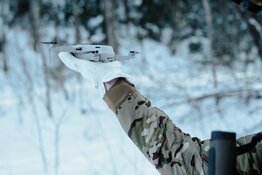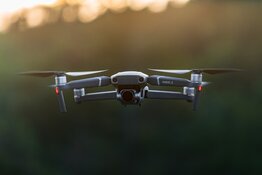


Red Cat Holdings Inc. (RCAT:NASDAQ) is supplying its Black Widow drones as part of a U.S. Army Threat Analysis Kit delivered by Safe Pro Group Inc. (NASDAQ: SPAI) under an award valued at approximately US$743,000.
The kit combines Safe Pro's artificial intelligence-powered Navigation Observation & Detection Engine (NODE) with Red Cat's Black Widow drones, as well as annual AI model and algorithm software upgrades and operational field support.
According to Safe Pro, the company was recently awarded a subcontract from a defense prime contractor to provide the U.S. Army with a battlefield intelligence capability powered by its patented AI technology. The system processes video captured by Black Widow drones and includes training, software upgrades, and operational support services.
Safe Pro stated that training of U.S. Army personnel is anticipated before the end of June. The company also expects to provide operational support through the third quarter of 2026 and during planned exercises.
Powered by Safe Pro's SPOTD (Safe Pro Object Threat Detection) technology, the NODE edge computing system uses artificial intelligence and machine learning algorithms to detect threats, including landmines, cluster munitions, unexploded ordnance, and ambush drones. According to the company, the platform can identify more than 150 types of explosive threats and objects of interest.
The report stated that the global military drone market could generate annual revenues between US$80 billion and US$90 billion by 2030, while the worldwide commercial drone market is expected to exceed US$54 billion by 2030.
The commentary also highlighted Red Cat's maritime division, Blue Ops, which recently announced that it is ramping into full-rate production of the Variant 7 uncrewed surface vessel platform for defense and national security missions.
Drone and Counter-Drone Markets Continue to Expand
A June 12 sector commentary from USA News Group noted that the defense technology industry continued to see growing demand for drone, counter-drone, and autonomous systems as governments increased investment in military modernization and homeland security capabilities. The publication wrote that "cheap, weaponized drones are now a battlefield and homeland-security staple," making systems designed to detect, track, and defeat those threats "one of the fastest-growing niches in defense spending." The report also highlighted the Pentagon's "Drone Dominance" initiative, which had targeted the deployment of roughly 300,000 lower-cost autonomous systems by the end of 2027.
According to the commentary, procurement efforts are increasingly focused on integrated platforms that combine sensors, artificial intelligence, communications technologies, and real-time perception capabilities to support intelligence, surveillance, and reconnaissance, border protection, critical infrastructure monitoring, and counter-drone operations.
Internationally, Foreign Affairs reported on June 13 that Greece's armed forces had evaluated unmanned aerial, surface, and underwater systems during the national joint exercise "Doureios Ippos (Trojan Horse) 2026," which also tested anti-drone technologies. The publication wrote that Greece's defense ministry had laid the foundation stone for the country's third and largest military drone factory at Malakasa.
According to the report, the facility was expected to become operational following infrastructure upgrades and would produce Class I and Class II drones, while a research and development unit would focus on larger systems. The Defense Ministry also aimed to increase annual production of Class I drones to at least 10,000 units from 4,000 and planned to open new schools for drone operators in the Air Force and Navy.
A June 14 report from Grand View Research described continued expansion across the broader unmanned systems industry. The research firm stated that the global unmanned systems market was valued at US$29.3 billion in 2025 and estimated the market at US$32.4 billion in 2026.
Grand View Research wrote that market growth was driven by "the surging demand for autonomous and semi-autonomous platforms spanning defense, surveillance, logistics, and industrial applications."
The firm also reported that rising defense spending and geopolitical tensions had accelerated demand for intelligence, surveillance, and reconnaissance capabilities and high-risk mission support. According to the report, advances in artificial intelligence, sensor fusion, edge computing, and communications technologies had enabled real-time data processing and "seamless multi-domain operations across aerial, ground, and maritime platforms."
Grand View Research further stated that military and law enforcement agencies had increasingly adopted unmanned systems to enhance mission efficiency and reduce personnel risks. The report noted that governments worldwide had increased investment in unmanned aerial systems technologies while forming strategic alliances with private contractors to support innovation, manufacturing capacity, and deployment across defense, law enforcement, agriculture, and civil applications.
The research firm reported that unmanned aerial vehicles accounted for more than 63% of market revenue in 2025, while North America represented more than 44% of the global market. It also stated that the U.S. market held more than 80% of North American unmanned systems revenue during the year, supported by defense spending focused on intelligence, surveillance, and reconnaissance programs, tactical autonomy initiatives, and large-volume drone production.
Analysts Reiterated Buy Ratings Following Army Order and First-Quarter Results
On March 3, Ladenburg Thalmann analyst Glenn Mattson maintained a Buy rating on Red Cat Holdings and raised his price target to US$20 from US$15.
More recently, Needham & Company analyst Austin Bohlig maintained a Buy rating and US$20.00 price target on Red Cat Holdings, Inc. in a May 8 research note following the company's announcement of a US$9.5 million purchase order under the U.S. Army's Short Range Reconnaissance Program of Record.
Bohlig wrote that the order "demonstrates strong intent from the Army to continue scaling deployment of small unmanned systems and could represent one of the final contract awards before the program transitions into a significantly larger Full Rate Production phase." He also stated, "We believe this announcement is another signal pointing to growing global demand for Red Cat's portfolio of unmanned systems."
Needham said it viewed Red Cat as "uniquely positioned to capture accelerating demand for defense-grade small ISR drones as the U.S. looks to restore drone dominance" and described the SRR2 opportunity as "a transformational contract for Red Cat." The firm maintained its Buy rating and US$20.00 price target while noting its view that the company was "rapidly diversifying its revenue stream beyond this system."
Separately, ThinkEquity analyst Ashok Kumar reiterated a Buy rating and US$25.00 price target in a May 8 research note following the company's first-quarter results.
Kumar wrote that "Q1 showed real operating progress, but the debate has shifted from product relevance to execution." The report noted first-quarter revenue of US$15.5 million compared with US$1.6 million in the prior-year period, while gross margin improved to 12.7% from negative 52.1%.
"Q1 validates gross-margin inflection and demand, but not yet the full revenue target," Kumar wrote. The report noted that the company introduced an annual revenue target of US$150 million to US$180 million and stated that achieving the low end of that range would require approximately US$44.8 million in quarterly revenue over the remainder of the year.
ThinkEquity described Black Widow as "the core revenue engine" and noted management's statement that the platform became "the first Group 1 UAS integrated with Anduril Lattice." Kumar added that "Army C2 interoperability is a baseline filter, not a secondary technology detail," and wrote that future Army revenue could depend on "maintaining certification, interoperability, and standing within Army-preferred software architectures."
The report also discussed the company's maritime expansion through Blue Ops and developments involving FlightWave, Apium, and the pending Quaze acquisition. Kumar wrote that "the disclosed opportunity set is also more diversified," while stating that the company remained "investable, but not de-risked."
On May 27, H.C. Wainwright initiated coverage of Red Cat Holdings with a Buy rating and a US$20 price target.
Analyst Amit Dayal highlighted the company's portfolio of unmanned aerial and maritime systems, including the Black Widow, Edge 130, FANG, and Blue Ops platforms. Dayal also noted the company's focus on U.S.-manufactured, NDAA-compliant technologies serving defense and government customers.
The report stated that Red Cat's portfolio spans both aerial and maritime unmanned systems, positioning the company across multiple defense and security applications.
According to Benzinga analyst data as of June 15, Red Cat Holdings carried a consensus Buy rating based on coverage from five analyst firms, with a consensus price target of US$19.60. The highest published price target was US$25.00, while the lowest was US$13.00.
The most recent analyst action came from Roth Capital on June 1, when the firm initiated coverage with a Buy rating and a US$25.00 price target.
Army Training and Operational Support Continue Through Third Quarter
According to Safe Pro, training for U.S. Army personnel is anticipated before the end of June as part of the recently delivered Threat Analysis Kit program.
 Streetwise Ownership Overview*
Red Cat Holdings Inc. (RCAT:NASDAQ)
| Date | Old Symbol | Old Shares | New Symbol | New Shares |
|---|---|---|---|---|
| 04/30/21 | RCAT | 1 | RCAT | 1 |
| 08/29/19 | TFVRD | 1 | RCAT | 1 |
The company also stated that it expects to provide operational support through the third quarter of 2026 and during planned military exercises. The award includes annual AI model and algorithm software upgrades as well as field support services.
The battlefield intelligence system combines Safe Pro's NODE edge-computing platform with video captured by Black Widow drones. According to the company, the system is designed to process drone imagery and identify threats, including landmines, cluster munitions, unexploded ordnance, and ambush drones.
Safe Pro stated that the platform can identify more than 150 types of explosive threats and objects of interest while generating terrain maps, orthomosaics, digital surface maps, and 3D models incorporating detected threats.
Ownership and Share Structure1
The ownership breakdown of Red Cat is 9.23% is held by insiders and management, 46.23% by 333 institutions, and the remainder by retail investors.
The largest shareholder overall is the CEO, Thompson, with 8.65%.
The company has 122.74 million shares outstanding, a market cap of US$1.3 billion, and a 52-week range of US$5.71 to US$18.78.
| Want to be the first to know about interesting Technology and Robotics investment ideas? Sign up to receive the FREE Streetwise Reports' newsletter. | Subscribe |
Important Disclosures:
- As of the date of this article, officers, contractors, shareholders, and/or employees of Streetwise Reports LLC (including members of their household) own securities of Red Cat Holdings Inc. and Safe Pro Group Inc.
- James Guttman wrote this article for Streetwise Reports LLC and provides services to Streetwise Reports as an employee.
- This article does not constitute investment advice and is not a solicitation for any investment. Streetwise Reports does not render general or specific investment advice and the information on Streetwise Reports should not be considered a recommendation to buy or sell any security. Each reader is encouraged to consult with his or her personal financial adviser and perform their own comprehensive investment research. By opening this page, each reader accepts and agrees to Streetwise Reports' terms of use and full legal disclaimer. Streetwise Reports does not endorse or recommend the business, products, services or securities of any company.
For additional disclosures, please click here.
1. Ownership and Share Structure Information
The information listed above was updated on the date this article was published and was compiled from information from the company and various other data providers.