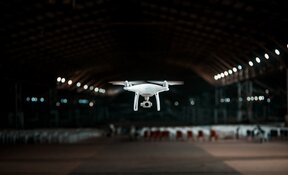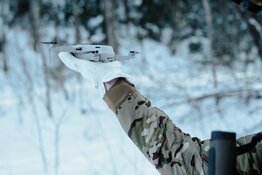


Companies are finding inspiration from the past to meet the need for cheaper drones and missiles to quickly replace the traditional expensive weapons used during ongoing conflicts in the Middle East and Europe.
More than a century ago, Henry Ford's innovation of the assembly line simplified the production of automobiles and "changed manufacturing forever," according to a report by Rachelle Graham for CBS News on March 18.
In 1913, Ford's moving assembly line drastically reduced the time required to build a car from over 12 hours to approximately 90 minutes, making automobiles more affordable and accessible to the general public. The efficiency and effectiveness of the assembly line were so profound that it quickly became a standard practice beyond its initial implementation in Michigan.
"The car that Henry Ford sold in the early teens was US$850," said Dave Marchioni, automotive and industrial curator for the Detroit Historical Society, according to Graham's report. "By the time the moving assembly line was working properly and producing at scale, it was US$250."
The rapid adoption of the assembly line across various industries is a testament to its success. Marchioni remarked, "When something is good, and it works, it spreads quickly."
He noted that once Henry Ford implemented this system, it swiftly became the industry standard, illustrating the impact of effective innovations in manufacturing processes.
Cost Putting Strain on Western Arsenals
With wars being fought around the globe in 2026, "Relatively inexpensive drones and missiles are forcing the United States and its Gulf partners to expend some of their most advanced and expensive defensive systems," wrote Chris Kremidas-Courtney for the European Policy Centre on March 9. "Iranian one-way attack drones such as the Shahed-136 cost roughly US$20,000 to US$50,000 each. Yet defending against them often requires interceptor missiles costing millions of dollars. Patriot interceptors cost roughly US$4 million each, while a THAAD interceptor can cost US$12–15 million."
She continued, "This cost asymmetry is already placing strain on Western arsenals. Iran's strategy relies on launching large numbers of relatively cheap drones and missiles in mixed salvos to stretch defensive systems and consume interceptor inventories."
According to a post on manufacturer Saab's website called "Winning the Cost-Per-Kill Battle," the threat posed by Unmanned Aerial Vehicles (UAVs) has evolved from "a marginal issue into a major challenge for armed forces worldwide."
This is particularly clear in Ukraine, where low-cost drones are used effectively against infrastructure, mechanized units, and individual soldiers, the company said.
"The conflict highlights not only the scale of the threat, but also the urgent need for effective and cost-efficient countermeasures," the post said. "At its core, this is an economic contest: NATO cannot afford to defeat cheap drones primarily with expensive missiles or complex systems. The decisive question is not only technical effectiveness, but sustainable cost-exchange ratios at scale."
Back to Simple
Meanwhile, in a nondescript building in northeast Virginia, companies are taking a cue from Ford and looking to simpler and quicker processes to greatly increase the number of available missiles and drones, according to a July 6 report by Jacob Judah for the Financial Times.
Inside the facility, operated by the defense group Co-Aspire, is bustling with activity as young technicians prepare missiles for potential future conflicts. Doug Denneny, a seasoned veteran and representative of Co-Aspire, explains the urgency of their mission: “This is all set up for if we have to go very fast."
According to Judah, the workshop is strategically organized with multiple workstations where warheads are integrated into missiles.
The setup reflects a pressing issue: the current production rate and cost of U.S. missiles are not meeting strategic needs. As the U.S. faces munitions shortages during its conflict with Iran, the need to enhance missile production capabilities became starkly apparent. The U.S. manufactures a mere 600 Tomahawk missiles annually, each costing about US$2.6 million, according to the report. Other critical missiles like the PrSM and JASSM are also costly, priced around US$1.6 million and US$1.9 million, respectively.
This high expense and limited production capacity are problematic, as Michael Horowitz, a former Pentagon official in charge of defense innovation, points out. “The American arsenal is based exclusively on expensive, exquisite, and hard-to-produce weapons systems," he remarked. Horowitz emphasized the necessity for a shift in approach due to the evolving nature of modern warfare.
Responding to these challenges, Co-Aspire is actively developing solutions to produce missiles more efficiently and cost-effectively, Judah wrote. The company has already made significant strides, perfecting the first of two new missile designs for the Pentagon within just four months. This rapid development is part of a broader effort to overhaul traditional manufacturing techniques, aiming to equip the U.S. military more swiftly and economically in the face of growing global threats.
Pushing the Boundaries of Production Speed and Cost-Efficiency
The landscape of missile manufacturing in the United States is undergoing a significant transformation, marked by a series of ambitious projects and acquisition programs, Judah's report noted. The U.S. Air Force has outlined a substantial investment, requesting approximately US$12 billion over the next five years to procure 28,000 missiles. Additionally, a recent Pentagon initiative aims to acquire 10,000 ground-launched missiles within the next three years. These programs suggest a shift towards a model where missiles could potentially be mass-produced swiftly across various facilities in America during wartime.
Doug Denneny, who operates a workshop that adopts a simplified approach to missile manufacturing, compares his operation to a fast-food model, emphasizing efficiency and simplicity, according to the Financial Times piece. "You could build this in a high school gymnasium," Denneny remarked, indicating the straightforward nature of the assembly process beside missiles prepped for integration with circuit boards.
His facility eschews complex machinery; instead, each missile can be assembled using basic hand tools and instructions from a notepad, allowing a new technician to be trained within a month. The workshop also utilizes a few 3D printers that continuously produce parts next to the engineers' cubicles.
This innovative approach is not isolated to Denneny's operations. Other defense startups and companies — like Anduril, Red Cat Holdings Inc., and Unusual Machines Inc. — are also pushing the boundaries of production speed and cost-efficiency.
Anduril Industries Inc.
Privately held Anduril Industries Inc. has initiated operations at its new factory in Ohio, marking a significant step in the company's expansion into manufacturing autonomous combat systems, according to Valerie Insinna of Defense Business Report on March 23.
The facility, known as "Arsenal-1," has started producing the Fury autonomous combat drone, with the company eyeing a substantial follow-on contract with the U.S. Air Force for Collaborative Combat Aircraft. However, the ambitions of Anduril extend beyond just the Fury drone. By the end of the year, the factory is set to launch production lines for several other projects, including the Roadrunner vertical takeoff and landing drone and the Barracuda low-cost cruise missile. Additionally, a classified platform will begin production in a distinct section of "Building 1."
The company has invested approximately US$1 billion into this expansive facility, which was announced in 2024. When fully operational, it will encompass seven buildings and employ around 4,000 workers. This development is poised to test whether Anduril can fulfill its commitment to producing low-cost, highly producible weaponry for the U.S. military in substantial volumes, amidst skepticism from critics who question the substance behind the company's flashy presentations.
In a series of briefings with reporters, Anduril officials outlined their innovative approach to manufacturing, which starkly contrasts with traditional methods used by established defense contractors, Insinna wrote.
Matt Grimm, the chief operating officer and co-founder of Anduril, emphasized the company's forward-thinking strategy. "As we think about new programs and new products, as we shape them for scaling, we're thinking about that manufacturing from the absolute day one," he stated. Grimm highlighted their focus on cost-effectiveness and adaptability in production processes. The manufacturing environment at Anduril is designed to be flexible, with minimal fixed installations, allowing for easy reconfiguration of the production line to accommodate new processes or equipment.
Moreover, Anduril's production strategy involves making deliberate design choices to enhance producibility, the report noted. For instance, the company opts to use aluminum instead of titanium for constructing airframes, incorporates readily available commercial components, and avoids using complex parts such as castings and forgings. These decisions are part of Anduril's broader goal to streamline production and reduce costs, aligning with their vision of quickly delivering large quantities of advanced military technologies.
The U.S. Air Force has selected Anduril for the production phase of the Collaborative Combat Aircraft (CCA) program, according to a post by Mark Shushnar on Anduril's website on June 17.
Anduril will deliver an initial set of FQ-44 semi-autonomous fighter aircraft, which are pivotal for ongoing testing, validation, and eventual operational deployment. The contract also lays a foundation for the Air Force to procure additional FQ-44 units over the coming years, ensuring a rapid and cost-effective expansion of fighter capabilities.
The FQ-44 represents the first semi-autonomous fighter aircraft to enter serial production, signifying a historic moment in military aviation, the company said. The Air Force's commitment to this program underscores a strategic shift towards utilizing large numbers of affordable, mass-producible semi-autonomous aircraft to enhance combat readiness and capacity swiftly. This approach addresses the urgent need for rapid production capabilities that crewed fighters and bombers, despite their technological advancements, cannot meet due to production time constraints and scalability.
"Since day one, our focus has been on eliminating production risk early," Shushnar wrote. "We have been refining, testing, and iterating on our production system, in parallel with aircraft development, for the past two years. We have already implemented our full-rate production processes and tooling on prototype aircraft, identifying and addressing issues during prototyping to streamline the transition into production."
Anduril has not only focused on the aircraft's design and capabilities but also on establishing a scalable production system. The production line at Arsenal-1, capable of producing up to 150 aircraft annually, embodies flexibility and scalability, essential for meeting future demands swiftly, the report said. This system has been refined over two years, with full-rate production processes already implemented on prototype aircraft to ensure a smooth transition to mass production.
As Anduril moves forward with this groundbreaking program, the company recognizes the challenges ahead in scaling production and deploying these operational capabilities effectively. However, the Air Force's selection of the FQ-44 as a cornerstone of America's strategic response to evolving threats reaffirms the project's direction and Anduril's commitment to delivering this next-generation airpower at scale. The journey ahead is pivotal, and Anduril stands ready to meet the demands of this ambitious endeavor, transforming a concept into a formidable asset in modern warfare.
Red Cat Holdings Inc.
Red Cat Holdings Inc. (RCAT:NASDAQ), a prominent U.S. provider of drone and robotic solutions for defense and national security, announced a significant partnership to increase manufacturing capacity through its maritime division, Blue Ops, with HADDY, a leader in robotic 3D printing and distributed manufacturing, according to an April 6 release. This collaboration will see the installation of advanced Agentic AI-powered robotic production systems at Blue Ops' manufacturing facility in Valdosta, Georgia. This enhancement is set to double the buildout capacity for Blue Ops' Unmanned Surface Vessels (USVs).
 Streetwise Ownership Overview*
Red Cat Holdings Inc. (RCAT:NASDAQ)
| Date | Old Symbol | Old Shares | New Symbol | New Shares |
|---|---|---|---|---|
| 04/30/21 | RCAT | 1 | RCAT | 1 |
| 08/29/19 | TFVRD | 1 | RCAT | 1 |
The partnership aims to revolutionize the way USVs are designed, constructed, and delivered by integrating Blue Ops' shipbuilding expertise with HADDY's innovative microfactory approach. This integration is expected to transform maritime manufacturing, leveraging large-scale 3D printing to enable quicker production timelines, enhanced flexibility, and scalability that traditional shipbuilding methods cannot match.
Barry Hinckley, President of Blue Ops, emphasized the transformative potential of this collaboration, stating, “This partnership advances our ability to iterate at the speed of modern conflict," and highlighted the industry shift towards 3D printing, comparing it to historical transitions such as from wood to fiberglass in boat building.
Hinckley also pointed out the importance of data and intellectual property protection, which he described as "non-negotiable" in their industry, and a key reason for choosing to partner with HADDY. The partnership facilitates a more dynamic production model for Blue Ops, allowing the company to rapidly prototype and produce various USV platforms, including 5-meter and 7-meter variants. The use of robotic 3D printing supported by AI enables quicker design iterations and faster transition from design to production, enhancing overall performance while meeting evolving customer needs efficiently.
As part of the agreement, HADDY will assist in developing a microfactory environment within Blue Ops' facility, which will not only increase production capacity but also ensure consistency and security in manufacturing processes. This setup will allow Blue Ops to utilize additional capacity from HADDY's broader network as needed, effectively scaling production in response to growing demand.
By embracing advanced manufacturing technologies early, Blue Ops is positioning itself as a leader in the rapidly evolving landscape of maritime systems production, Red Cat said. This move aligns with broader U.S. initiatives to bolster domestic manufacturing capabilities and ensure that critical defense systems can be produced at scale and delivered globally to meet both national and allied operational demands.
On July 2, Red Cat announced that its subsidiary, Teal Drones Inc., had successfully progressed to Gauntlet II of the Drone Dominance Program, marking a significant milestone in the competition. This advancement places Teal among the 19 elite companies selected to participate in the next phase of the program, scheduled for August 2026 at Fort Carson, Colorado.
This development follows the Phase 2 Qualifier, which took place at Camp Grayling, Michigan. During this event, 49 companies were challenged to demonstrate the capabilities of approximately 79 unique drones in various mission scenarios, including Long Range Strike and Tactical Assault in Close Quarters. The selection of Teal Drones for Gauntlet II underscores Red Cat's commitment to developing reliable, mission-ready drones that enhance the operational capabilities of military personnel by providing essential situational awareness and strategic advantages on the battlefield.
“The Drone Dominance Program is focused on rapidly identifying proven drone technologies that can provide a decisive advantage on the modern battlefield, and we are proud to continue competing in support of that mission," Red Cat Chief Executive Officer Jeff Thompson said.
In recent financial analyses, Red Cat Holdings has seen a positive reception from market analysts following significant developments in its operations and strategic contracts. On March 3, Glenn Mattson of Ladenburg Thalmann reaffirmed his Buy rating on Red Cat Holdings and raised his price target from US$15 to US$20. This optimistic outlook was echoed by Austin Bohlig of Needham & Company, who also maintained a Buy rating with a price target of US$20.
Bohlig's assessment came after Red Cat announced a substantial US$9.5 million purchase order from the U.S. Army's Short Range Reconnaissance Program of Record. He interpreted this order as a strong commitment by the Army to enhance its deployment of small unmanned systems, suggesting that this contract could precede a shift to a larger Full Rate Production phase. Bohlig stated, "We believe this announcement is another signal pointing to growing global demand for Red Cat's portfolio of unmanned systems."
Bohlig further noted that Red Cat is strategically positioned to meet the escalating demand for defense-grade small ISR drones as the U.S. seeks to reassert its dominance in drone technology. He described the contract as "a transformational contract for Red Cat" and reiterated the firm's Buy rating and US$20.00 price target, highlighting the company's rapid diversification of its revenue streams.
On the same day, ThinkEquity analyst Ashok Kumar also maintained a Buy rating on Red Cat, setting a price target of US$25. Kumar pointed out significant operational progress in the first quarter, where revenue jumped to US$15.5 million from US$1.6 million in the previous year, and gross margin improved dramatically to 12.7% from a negative 52.1%. He remarked, "Q1 validates gross-margin inflection and demand, but not yet the full revenue target," indicating that reaching the annual revenue target of US$150 million to US$180 million would require about US$44.8 million in quarterly revenue for the remainder of the year. Kumar emphasized the importance of the Black Widow drone as the "core revenue engine" and its integration with Anduril Lattice as a significant achievement. He also stressed the necessity of Army C2 interoperability, describing it as essential rather than an additional feature, and suggested that future revenues could depend on maintaining certification and interoperability within preferred Army software architectures.
Additionally, on May 27, H.C. Wainwright began covering Red Cat Holdings, assigning a Buy rating and a US$20 price target. Analyst Amit Dayal highlighted the company's extensive portfolio of unmanned aerial and maritime systems, focusing on U.S.-manufactured, NDAA-compliant technologies for defense and government clients.
As of June 15, according to Benzinga, Red Cat Holdings maintained a consensus Buy rating from five analyst firms, with an average price target of US$19.60, ranging from a high of US$25 to a low of US$13. The most recent analyst activity was from Roth Capital, which initiated coverage on June 1 with a Buy rating and a US$25 price target, underscoring the strong market confidence in Red Cat Holdings' strategic direction and market potential.
Red Cat Holdings Inc. is currently positioned favorably in the market according to financial analysts, with a consensus price target among five analysts of US$19.60. The highest price target set for Red Cat is US$25, as determined by Roth Capital.
1The ownership breakdown of Red Cat is about 9% is held by insiders and management, 44% by 336 institutions, and the remainder by retail investors.
The largest shareholder overall is the CEO, Thompson, with 8.54%.
The company has 151.29 million shares outstanding, a market cap of US$1.53 billion, and a 52-week range of US$5.77 to US$18.78.
Unusual Machines Inc.
Unusual Machines Inc. (UMAC:NYSEAMERICAN), a leading manufacturer of NDAA-compliant drone components, has announced strategic purchase orders totaling approximately US$75 million to secure essential materials and inventory for its drone component product lines, the company said on May 5. This move is aimed at ensuring the company's supply chain remains compliant, scalable, and capable of meeting the expected surge in demand over the next 12 months. This initiative follows a successful capital raise of about US$150 million, which the company has earmarked for enhancing inventory investment and improving supply chain readiness. These funds will also facilitate the acquisition of long-lead materials essential for maintaining production schedules and meeting customer delivery timelines.
Streetwise Ownership Overview*
Unusual Machines Inc. (UMAC:NYSEAMERICAN)
"We are focused on being material complete and ready to deliver so we can meet demand as it continues to scale," Unusual Machines Chief Executive Officer Allan Evans said.
He highlighted that the primary challenge in the market is not demand but rather supply chain management, production timing, and scalability. "Making these purchases now allows us to deliver when our customers need it," Evans added, underscoring the company's proactive approach to staying ahead of demand.
The company's strategic planning is informed by clearer market signals due to structured procurement programs and significant U.S. drone procurement initiatives, such as the Department of War's Drone Dominance efforts. These initiatives have provided Unusual Machines with better visibility into the addressable market, enabling more strategic supply chain planning. Additionally, evolving U.S. regulatory frameworks and procurement requirements are accelerating the demand for compliant, U.S.-based production, highlighting the necessity for a well-prepared and reliable supply chain capable of delivering at scale.
In a related development, Unusual Machines announced significant upgrades to its motor manufacturing operations in Orlando in April. These enhancements are expected to more than double the facility's daily production capacity. Previously, the facility produced about 15,000 motors monthly, but with the introduction of second and third shifts, daily production is projected to increase from approximately 700 to 1,500 parts.
Looking ahead, Unusual Machines has ambitious plans to further boost its production capacity. The company intends to double its motor factory workforce to accommodate increased production demands and plans to install a high-volume automated motor production line in the latter half of 2026. This installation is expected to significantly enhance the manufacturing output of the facility, aligning with the company's strategic goals to meet escalating market demands efficiently.
In a June 29 release, UMAC announced its inclusion in the Russell 2000® Index, marking a significant milestone in the company's growth trajectory. This inclusion in the index, which took place during the first 2026 reconstitution of the Russell indexes, signifies a step up from its previous position in the Russell Microcap® Index. The Russell 2000® Index is renowned for measuring the performance of approximately 2,000 small-cap U.S. companies and serves as a critical benchmark for small-cap equity portfolios, widely utilized by investment managers and institutional investors.
The elevation of Unusual Machines to the Russell 2000® Index underscores the company's ongoing expansion efforts, particularly in enhancing U.S.-based manufacturing capabilities and developing a more controlled and compliant supply chain for drone components. This strategic positioning is aimed at ensuring the company remains equipped to meet the growing demand within the industry.
"We've been focused on building a business that can deliver, expanding production capacity, strengthening the supply chain, and staying ready to meet demand," Evans said. He highlighted that the inclusion in the Russell 2000® not only reflects the company's significant progress but also boosts its visibility among a wider array of institutional investors, potentially enhancing investor interest and investment in the company.
In a recent analysis dated May 4, Litchfield Hills analyst Barry Sine addressed the challenges highlighted by a Wall Street Journal article regarding the U.S. efforts to diminish reliance on Chinese drone components. The article, titled "The U.S. Wants to Break China's Drone Dominance. Here's Where It Will Struggle," outlined the difficulties faced by U.S. companies in scaling drone component production. Contrary to these challenges, Sine pointed out that Unusual Machines is making significant strides in this area.
Unusual Machines has been actively expanding its domestic production capabilities, effectively reducing its dependence on Chinese supplies. According to Sine, the company has successfully ramped up its motor production capacity to an expected 120,000 units per month, fueled by robust demand from enterprise and government sectors. This increase is part of a broader strategy that involves integrating subsystems such as NDAA-compliant motors, flight controllers, ESCs, and video systems — all of which are already being marketed to enterprise and government clients.
Financially, Unusual Machines is on an upward trajectory. Sine forecasts that enterprise revenue will grow from US$27 million in 2026 to US$46 million in 2027, as the company continues to enhance its production capacity and automation. This expansion is expected to significantly improve profit margins, with gross margins projected to increase from 35% in 2025 to 48% in 2027, thanks to greater efficiencies in motor production.
Sine emphasized the company's proactive measures to establish a robust U.S. drone component manufacturing operation.
"The Journal is correct that standing up a high-volume U.S. drone component manufacturing business is difficult, but Unusual Machines is doing exactly that," he stated. Sine detailed the company's strategic moves, including the acquisition of an Australian motor manufacturer, the recruitment of key senior manufacturing executives, the opening of a new production facility, and the employment of a substantial workforce. He noted that the facility is currently producing headsets and motors at scale, operating three shifts daily, including weekends, to meet production demands. By the end of the year, production is anticipated to increase sixfold as automated equipment is installed and becomes operational.
Reflecting his confidence in Unusual Machines' direction and capabilities, Sine has rated the stock a Buy with a target price of US$25 per share, indicating a potential 76% return from the current levels.
1As for ownership and share structure, eight strategic entities own about 6% of Unusual Machines, including the CEO, Evans, with 3.33%. About 171 institutions hold 57%.
Unusual Machines has 47.79 million shares outstanding. Its market cap is US$1.03 billion. Its 52-week range is US$7.25–34.36 per share.
| Want to be the first to know about interesting Special Situations and Technology investment ideas? Sign up to receive the FREE Streetwise Reports' newsletter. | Subscribe |
Important Disclosures:
- Unusual Machines Inc. is a billboard sponsor of Streetwise Reports and pays SWR a monthly sponsorship fee between US$3,000 and US$6,000.
- As of the date of this article, officers, contractors, shareholders, and/or employees of Streetwise Reports LLC (including members of their household) own securities of Red Cat Holdings Inc. and Unusual Machines Inc.
- Steve Sobek wrote this article for Streetwise Reports LLC and provides services to Streetwise Reports as an employee.
- This article does not constitute investment advice and is not a solicitation for any investment. Streetwise Reports does not render general or specific investment advice and the information on Streetwise Reports should not be considered a recommendation to buy or sell any security. Each reader is encouraged to consult with his or her personal financial adviser and perform their own comprehensive investment research. By opening this page, each reader accepts and agrees to Streetwise Reports' terms of use and full legal disclaimer. Streetwise Reports does not endorse or recommend the business, products, services or securities of any company.
For additional disclosures, please click here.
1. Ownership and Share Structure Information
The information listed above was updated on the date this article was published and was compiled from information from the company and various other data providers.